
King/Chinook Salmon
Silver/Coho Salmon
Halibut, Ling Cod, Rockfish available all summer
All accommodations & rooms are double occupancy
Accommodation type
Private Rooms (4)
Cedar House
Spruce House
Bluff House
Min occupancy
2 people
4 people
6 people
6 people
The Kitchen
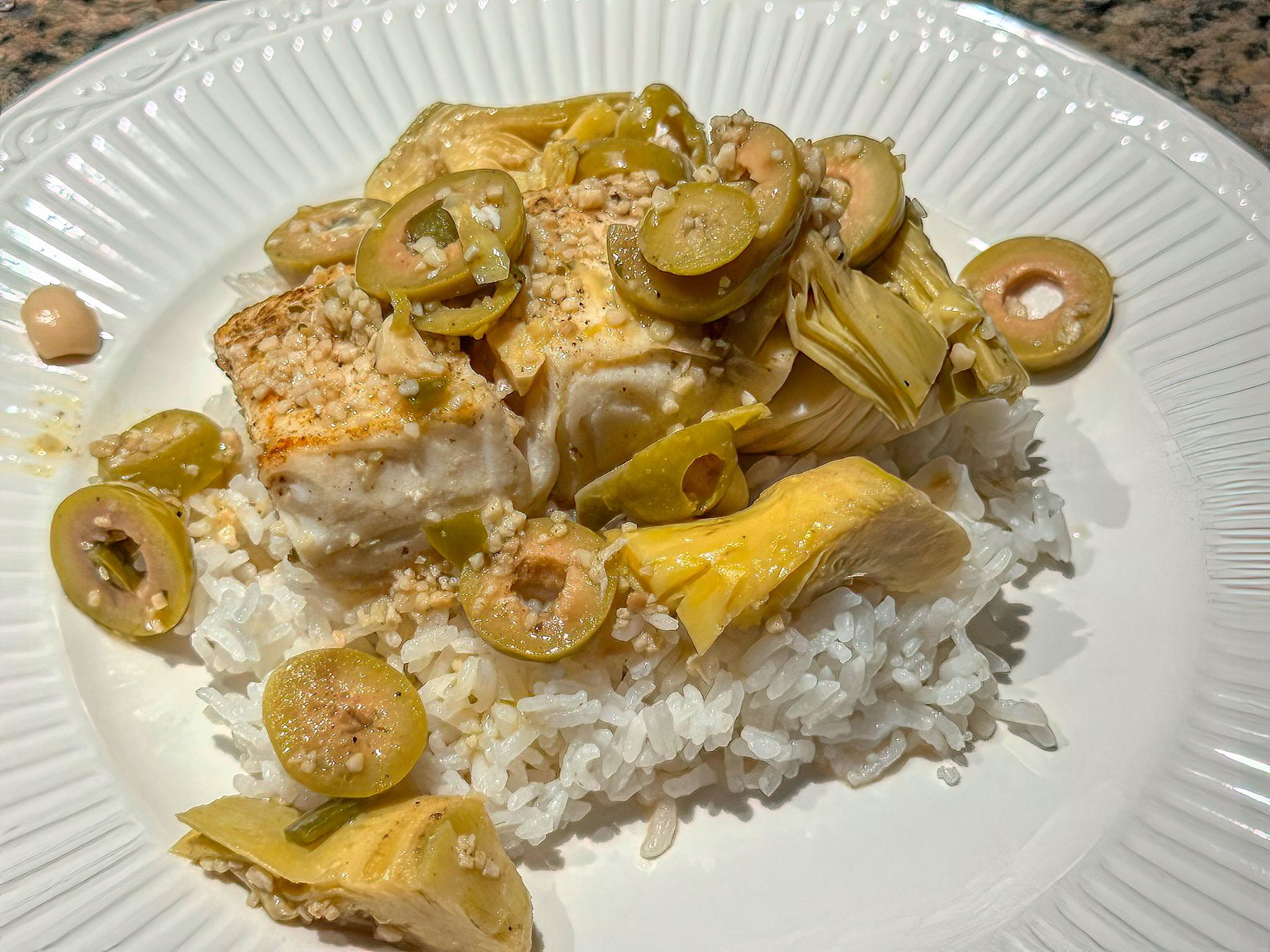
Phil’s Famous Artichoke Halibut — Following the Recipe Exactly
Artichokes, garlic, jalapeño-stuffed olives, Chardonnay and butter, all in the pan with a piece of halibut. On paper it reads like too much for a fish this mild. So we cooked it exactly as written, changing nothing but the olives, and photographed every step.
The recipe is specific about the order: sear the halibut and take it out, build the sauce in the same pan, put the fish back, then take the pan off the heat. It would be easy to read that as fussiness and cook everything together. The whole question here is whether the sequence is doing real work.
No shortcuts. No reordering. The one substitution was the olives, and it is noted where it happens. The recipe itself is here: Phil’s Famous Artichoke Halibut with Chardonnay Butter Sauce and White Rice.
Step one: sear first
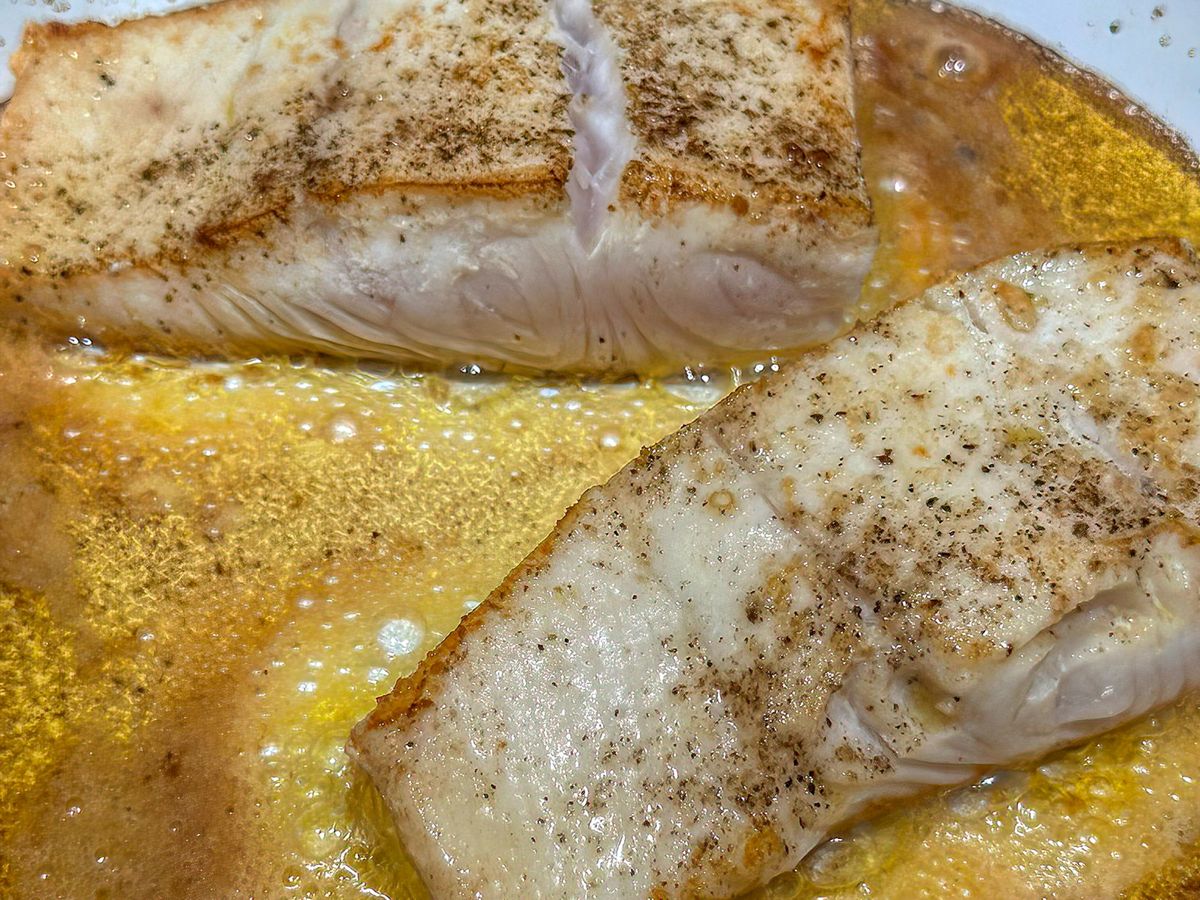
The recipe starts with a quick sear:
- Butter in the pan
- Two minutes per side
- Then take the halibut out
This step is everything, and it is not about cooking the fish through. It is about:
- Locking in moisture
- Creating a light crust
- Giving the halibut the structure to hold up later
At this stage the dish is clean and simple — exactly what you would expect from good halibut and nothing else.
Step two: build the sauce
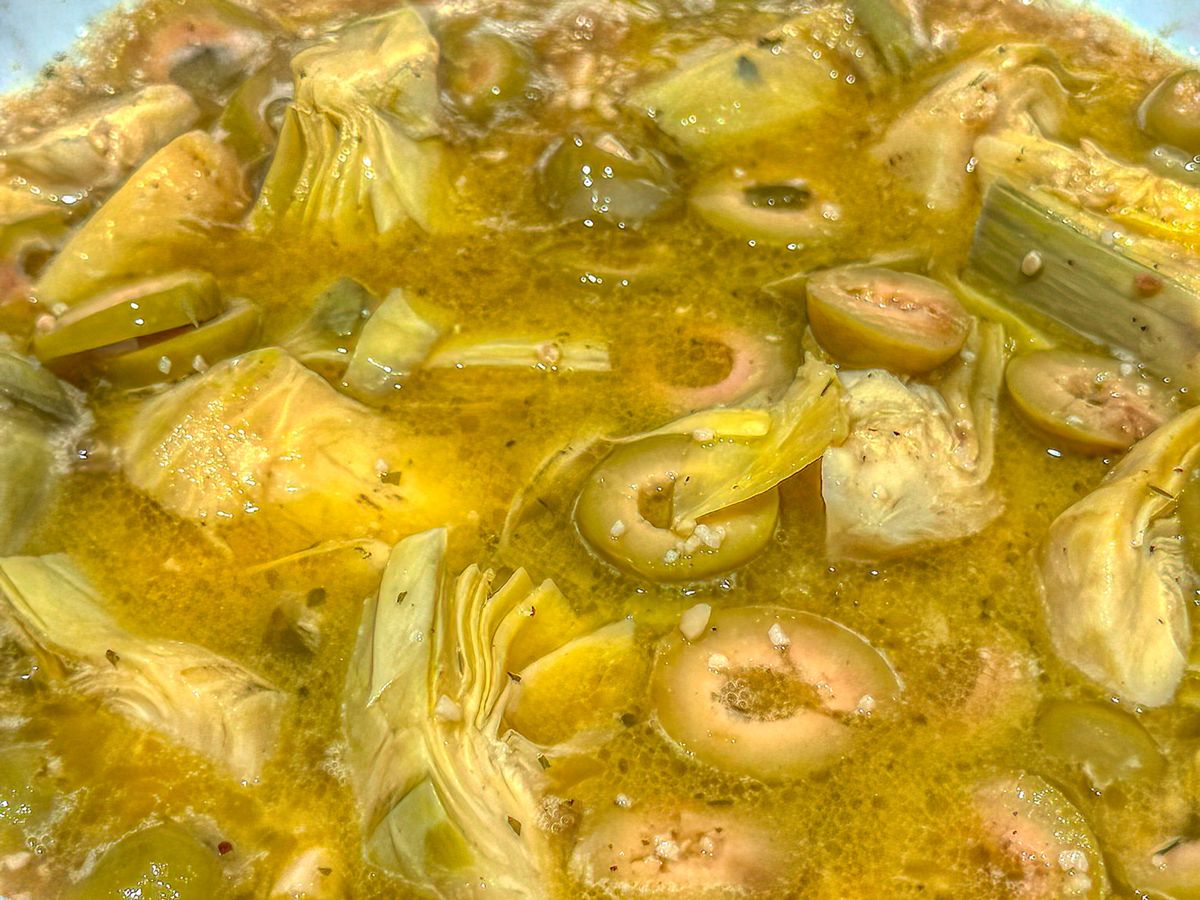
With the halibut out, the rest goes into the same pan:
- Marinated artichokes
- Garlic and jalapeño stuffed olives — the only change we made
- Minced garlic
- Chardonnay
- Butter
Then you follow the recipe exactly: simmer five minutes on medium‑high.
This is the point where it feels aggressive. The olives are salty, the artichokes are tangy, the garlic is forward, and the jalapeño brings heat. It is fair to wonder:
Is this going to overpower the fish?
Step three: return the fish
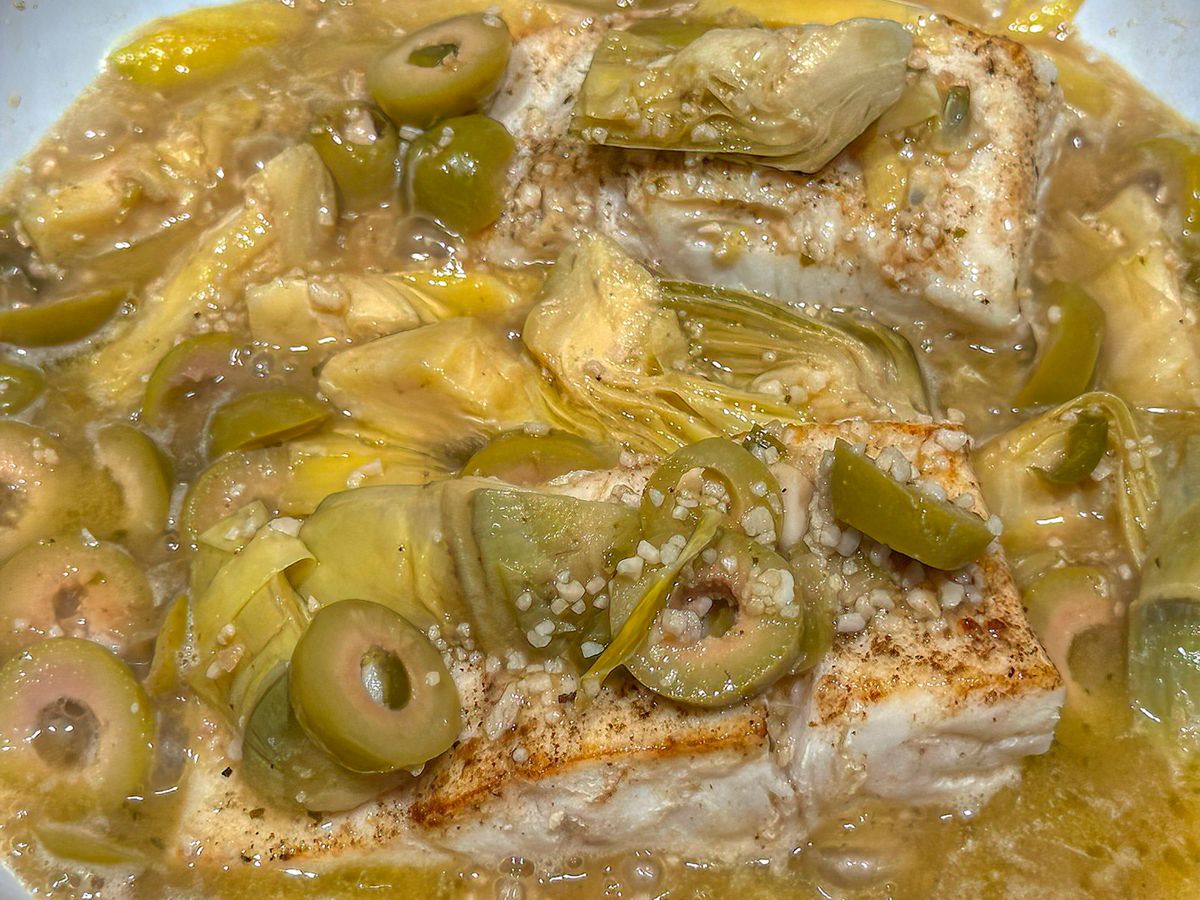
Now the step that decides it:
- Put the halibut back in the pan
- Baste it with the sauce
- Cover
- Take it off the heat
- Let it sit about three minutes
No additional cooking. No turning it over twice to check. And this is where the recipe proves itself. The halibut finishes gently, takes on the flavor without breaking apart, and stays moist and intact. The sauce softens at the same time — it balances, and becomes cohesive instead of sharp.
Step four: plate over rice
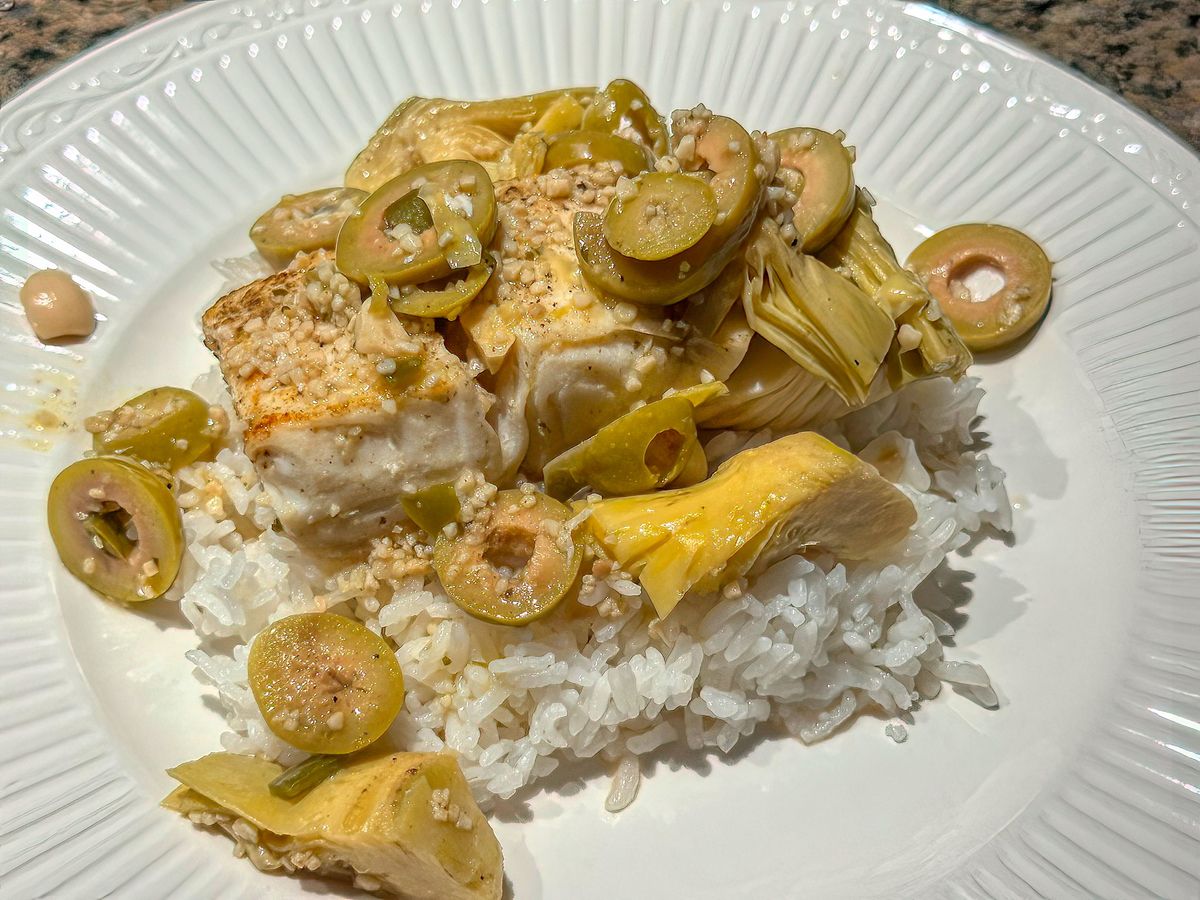
The rice is not a filler here. It absorbs the butter and the wine, balances the salt and the acidity, and turns what were bold separate flavors into something smooth and complete. Plated, the dish finally makes sense.
So does it work?
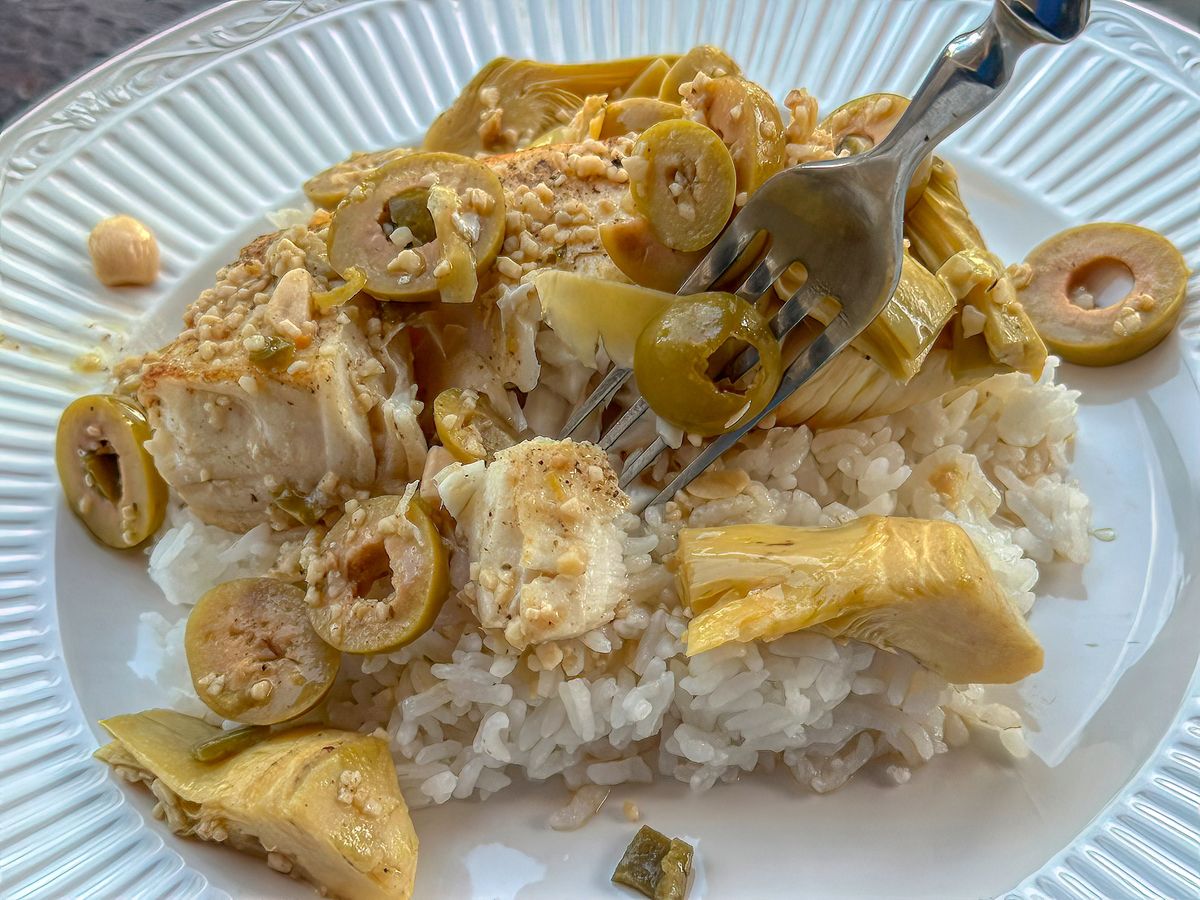
Yes — and the order of operations is why. Change the sequence and it likely falls apart. Done as written:
- Searing first protects the fish. It builds structure, so the halibut can take the sauce without disintegrating.
- Simmering the sauce separately builds flavor. Everything concentrates before the fish is introduced.
- Finishing off the heat is the secret. It keeps the halibut tender and makes overcooking almost impossible.
- The jalapeño olive twist adds an edge — a subtle heat that cuts the richness without taking it over.
This is a recipe built on restraint and timing rather than complexity. Sear first, simmer the sauce, finish gently. What reads like a bold and risky combination turns out balanced, and distinctly of this kitchen.
It works — but only if you trust the process.